

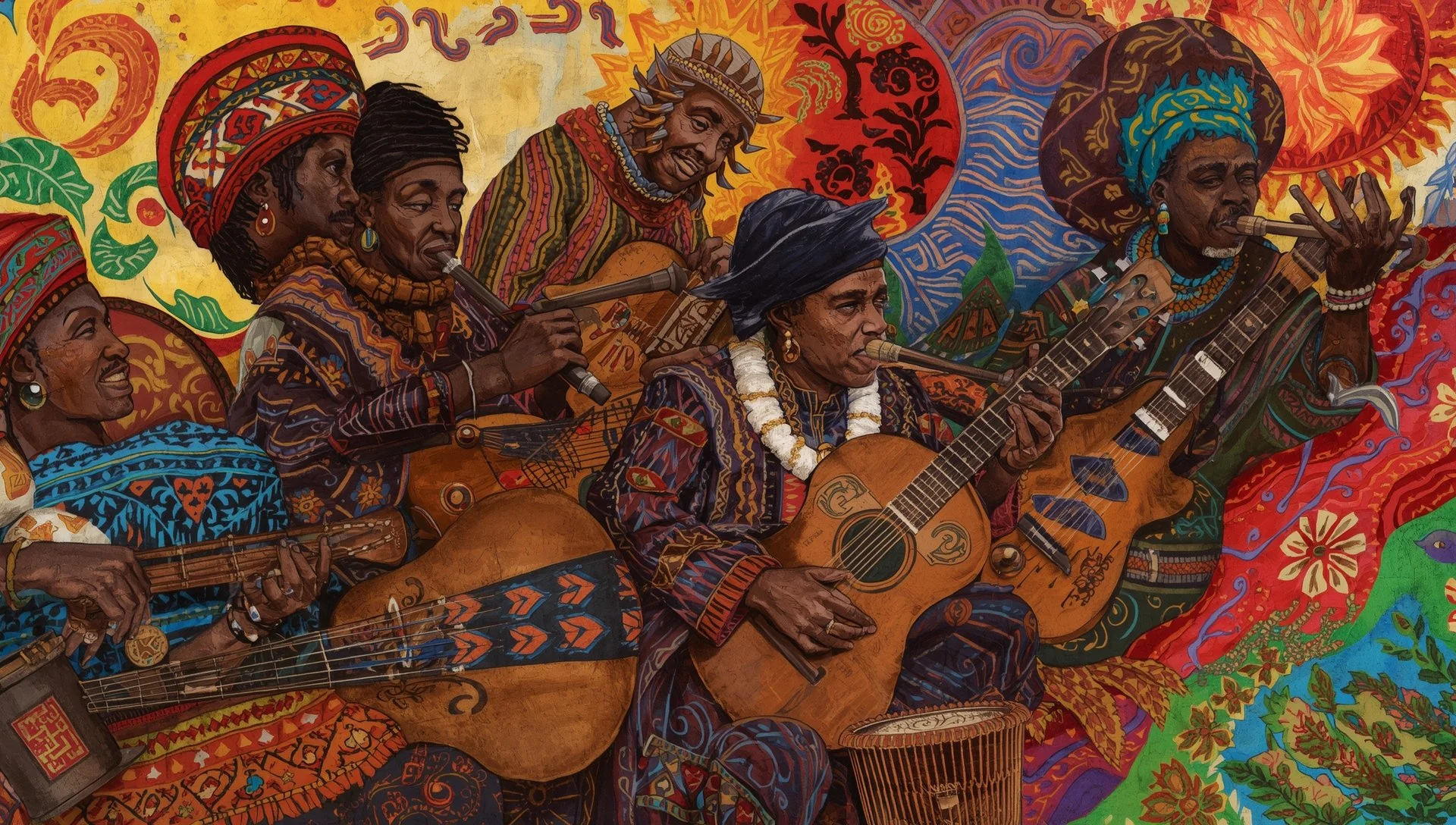
The Latin Express
The Drums
The conga family: Quinto (improvisation), tres dos (melody), tumba (foundation)—originally one drum (tumbadora) played by three people in rural Cuba
The batá tradition: Hourglass drums (iyá, itótele, okónkolo) used in Santería ceremony, sampled with the oreja (ear) technique—pressing the drum head to bend pitch, mimicking the tonal languages of Yorubaland
The cajón lineage: Peruvian Afro-Peruvian box drums that replaced banned drums, using the same hand techniques as the ngoma

Sample Sanctum created The Latin Express with a simple principle: genre is not a product. It is a process.
The "Latin" in Latin Express is not a marketing category. It refers to the Latin Church—the Catholic structure that tried to suppress African spirituality, and instead became the vessel for its preservation. Saints became orishas. Mass became toque de santo. The bass line that drives a modern reggaeton track is playing a 500-year-old conversation between captivity and resistance.
The Percussion
Clave: The "key" pattern, originally struck on wooden paddles used in ship galleys
Shekere: West African gourd rattles that became the chachá in Cuban rumba
Agogô: Double bells from Yorubaland that mark time in Brazilian samba de roda
Cencerro: Cowbells that replaced the gankogui bells of Ewe music in industrial Havana
"For the liberation of the oppressed, rhythm is the first scripture. —M.J.S., 1832"

The Latin Express is not a "construction kit" in the commercial sense. It is a reconstruction kit. It offers the materials to continue a building project that began in trauma and became the foundation of global popular music.
To use these sounds without understanding their origins is possible—but it misses the point. The point is that these rhythms were never meant to be owned. They were meant to be carried.